
Gold Loan Process: 10 Essential Steps, Eligibility and Documents
Gold Loan Process starts with choosing a regulated lender, checking eligibility, completing KYC and getting your eligible gold jewellery valued. A gold loan allows you to pledge eligible gold with a bank or NBFC and borrow money against its value without selling your jewellery permanently.
Before applying, it is important to understand eligibility, accepted gold, purity checks, Loan-to-Value or LTV, required documents, interest charges, repayment options and what can happen if the loan is not repaid on time. This guide from Loan Enquiry For You explains the complete process in simple language.

Table of Contents
1. Gold Loan Kya Hai Aur Kaise Kaam Karta Hai?
A gold loan is a secured loan where you pledge eligible gold jewellery, ornaments or permitted gold coins with a bank or NBFC and receive money against their eligible value. The important point is that you are not selling your gold. You are only keeping it with the lender as security until the loan is fully repaid.
People often use gold loans for medical expenses, education, household needs, business requirements or other short-term financial needs. Because the lender already has collateral, the process can sometimes be simpler than applying for an unsecured personal loan.
During the Gold Loan Process, remember that the lender does not simply use the jewellery’s purchase price. First, the gold is checked for purity and net weight. After that, the lender determines the eligible value and applies the relevant Loan-to-Value ratio, also called LTV.
For example, jewellery bought for ₹2 lakh does not automatically qualify for a ₹2 lakh loan. Making charges, design cost, stones and other non-gold materials do not add to the intrinsic gold value used for the loan.
Once you repay the principal, interest and applicable charges, your pledged jewellery is returned. If you do not repay according to the agreement, the lender can start recovery proceedings and may eventually auction the pledged gold after following the applicable process.
This is why a gold loan can be useful in an emergency, but it should still be taken with a clear repayment plan.
2. Gold Loan Eligibility Kaise Check Hoti Hai?
The next step in understanding Gold Loan Process is checking whether you meet the lender’s eligibility requirements. Gold loan eligibility can be relatively straightforward because the loan is backed by gold, but simply owning jewellery does not guarantee approval.
The applicant must meet the bank or NBFC’s customer and KYC requirements. Depending on the lender, salaried employees, self-employed individuals, business owners, pensioners and other eligible individuals may be able to apply.
The lender will also check whether the gold offered as collateral is acceptable. The jewellery must satisfy its purity, valuation and ownership requirements. Repayment capacity can also be assessed, especially depending on the loan amount and applicable rules.
- Applicant’s age and identity
- KYC completion
- Gold type and purity
- Requested loan amount
- Repayment capacity
- Ownership of the pledged gold
- Lender’s internal credit policy
A borrower should not assume that eligibility is exactly the same at every lender. One bank may require additional documents or follow a different internal policy from another NBFC.
If you want to understand the Gold Loan Process of a particular lender, check its latest official eligibility page before visiting a branch. This will help you avoid unnecessary delays and make the application process smoother.
3. Gold Loan Ke Liye Kaunsa Gold Accept Hota Hai?
Not every type of gold is automatically accepted for a normal gold loan. Eligible collateral generally includes gold jewellery and ornaments, while certain permitted gold coins may also be accepted subject to applicable rules and lender policy.
Primary gold such as bullion or gold bars should not be assumed to qualify for a normal personal gold loan. That is why it is important to confirm the product conditions before taking your gold to a branch.
Commonly accepted jewellery may include chains, necklaces, bangles, rings, earrings and other eligible ornaments. Gold coins may also be accepted in permitted cases, but regulatory and lender-specific limits can apply.
Another important part of Gold Loan Process is understanding that the full weight of your jewellery may not be counted as gold. A necklace can contain stones, beads, strings, wax, fastenings or other non-gold material. These parts can be deducted during valuation.
- Gold chains
- Gold necklaces
- Bangles
- Rings
- Earrings
- Other eligible ornaments
- Permitted gold coins, subject to conditions
Your jewellery also does not always need to be 24-carat. The lender can assess jewellery of different purity levels and calculate its eligible value according to the actual gold content.
Before applying, confirm that the type of gold you plan to pledge is accepted by your chosen lender.
4. Gold Ki Purity Aur Value Kaise Check Hoti Hai?
Gold valuation is one of the most important stages of the loan process because the amount you can borrow depends heavily on the actual eligible value of your jewellery.
The lender or an authorised appraiser checks the purity and weight of the gold. The valuation is based on the actual gold content rather than simply using the price printed on your jewellery bill.
There are two useful terms to understand:
- Gross Weight: Total weight of the jewellery.
- Net Gold Weight: Eligible gold weight after deducting stones and other non-gold material.
Suppose a necklace weighs 30 grams but contains approximately 4 grams of stones and other non-gold components. The lender may calculate the eligible gold content using roughly 26 grams, subject to the actual appraisal and purity.
When comparing the Gold Loan Process across lenders, do not confuse jewellery market price with loan valuation. Making charges, design cost and the value of stones do not automatically increase the collateral value.
Before accepting the loan, check the details recorded by the lender, including purity, gross weight, net weight, deductions and final assessed value. Keep the valuation or pledge record safely until your gold is returned.
If a deduction is unclear, ask the lender to explain it before signing the agreement. A transparent valuation helps you understand why the sanctioned amount may be lower than expected.
5. Gold Par Kitna Loan Mil Sakta Hai? LTV Explained
One of the most important concepts in Gold Loan Process is the Loan-to-Value ratio or LTV. LTV tells you the maximum loan that may be offered compared with the eligible value of your pledged gold.
| Total Consumption Loan Amount | Maximum LTV |
|---|---|
| Up to ₹2.5 lakh | 85% |
| Above ₹2.5 lakh and up to ₹5 lakh | 80% |
| Above ₹5 lakh | 75% |
These levels form part of the current RBI framework for applicable consumption loans against eligible gold and silver collateral. For the latest regulatory information, refer to the official Reserve Bank of India website.
For example, suppose the eligible value of your pledged gold is ₹2,00,000 and an 85% maximum LTV applies. The mathematical maximum would be ₹1,70,000.
However, this does not mean every lender must sanction the full ₹1.70 lakh. The actual loan amount can be lower depending on the lender’s valuation, margin requirements and internal policy.
Always ask the lender to clearly show you the net gold value, applicable LTV and final sanctioned amount before you sign the agreement.
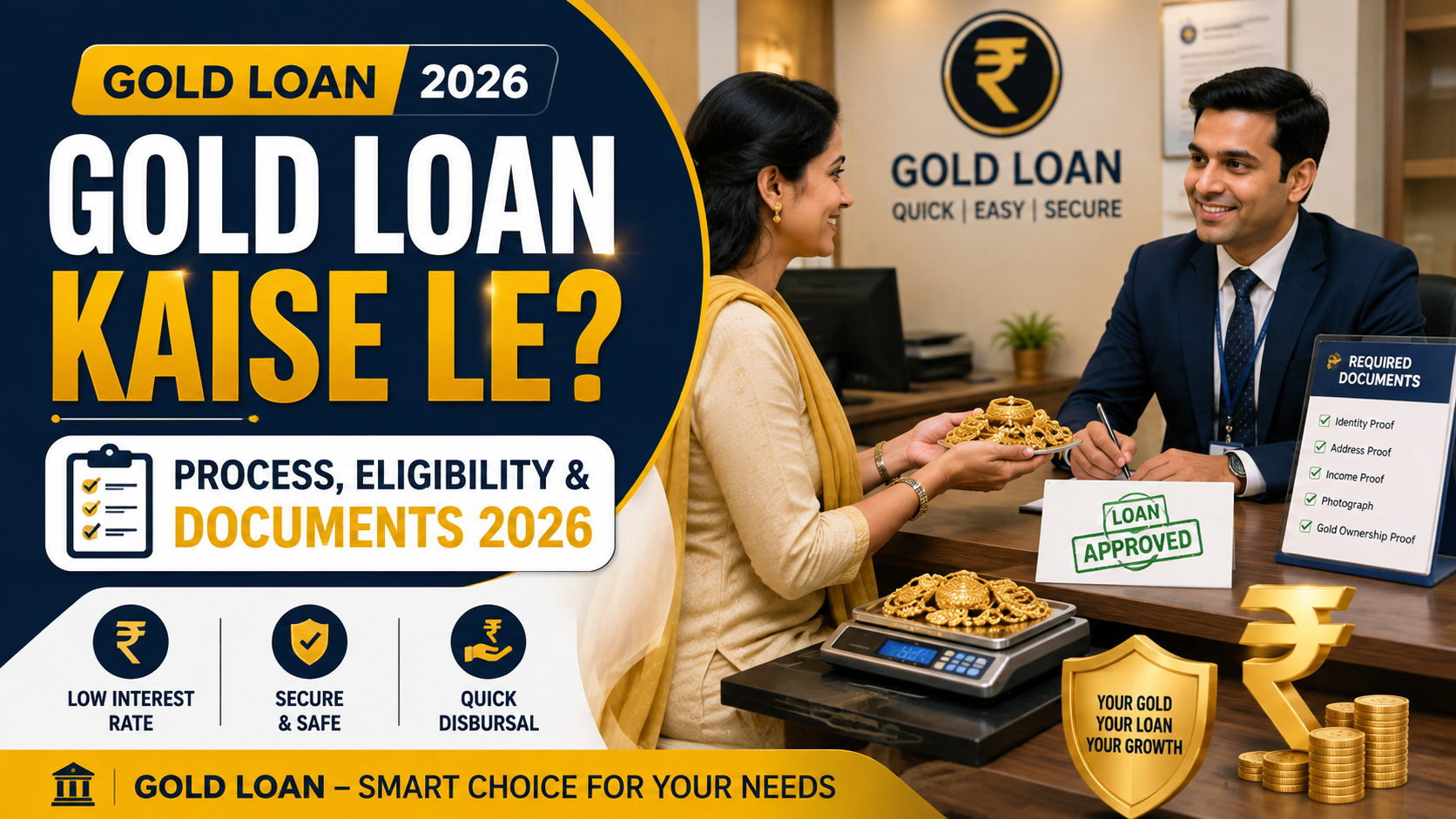
6. Gold Loan Ke Liye Kaunse Documents Chahiye?
Documents are another common question for people searching Gold Loan Process. Gold-loan documentation can be relatively simple, but exact requirements depend on the lender, customer status and loan amount.
Common Documents You May Need
- Aadhaar Card or another accepted identity document
- Address proof
- Passport, Voter ID or Driving Licence where accepted
- Recent passport-size photographs
- Completed gold-loan application form
- PAN where applicable
- Bank-account information where required
- Additional income or repayment documents if requested
Existing customers who have already completed full KYC with a bank may sometimes have a simpler documentation process. New customers may need to provide complete identity and address verification.
For a real lender example, you can check the official SBI Personal Gold Loan page. The link is left as a normal editorial DoFollow link, not a nofollow advertisement link.
Before visiting the branch, check the latest document checklist on your selected lender’s official website. Carry originals if physical verification is required and never submit false or altered documents.
Having complete documents ready can reduce delays and make the application process easier.
7. Gold Loan Process: Complete Step-by-Step Application
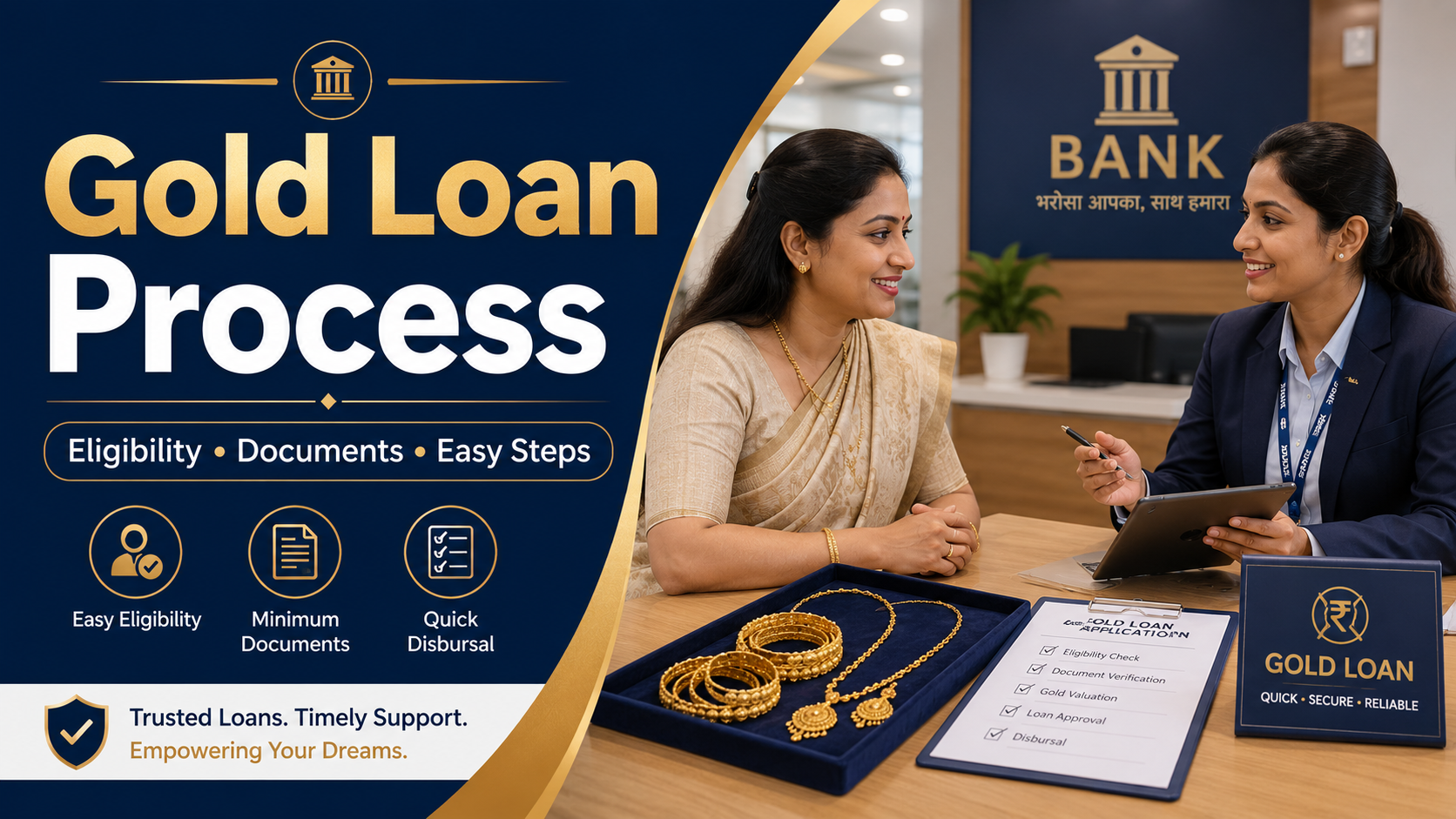
Now let us look at the Gold Loan Process step by step. The process is usually easy to understand once you know the correct order.
Step 1: Compare Regulated Lenders
Compare banks and NBFCs based on interest rate, processing charges, valuation, repayment options, tenure and additional fees. Do not select a lender only because an advertisement promises instant money.
Step 2: Check Eligibility
Check age, KYC, collateral and repayment requirements before submitting your application.
Step 3: Complete the Application and KYC
Fill in the application accurately and provide the required identity, address and other documents.
Step 4: Gold Valuation
The lender checks purity and net gold weight. Stones and other non-gold components are deducted from the eligible valuation.
Step 5: Review the Loan Offer
The lender uses applicable LTV and its product policy to calculate the possible loan amount. Check the sanctioned amount, interest rate, processing fee, appraisal charges, tenure, repayment method and late-payment conditions.
Step 6: Loan Disbursement
After approval and completion of the pledge process, the sanctioned amount is disbursed according to the lender’s permitted method.
Keep your loan agreement, valuation certificate and repayment schedule safely until the gold is returned. This is the basic Gold Loan Process process followed by most borrowers, although individual lenders may have slightly different procedures.
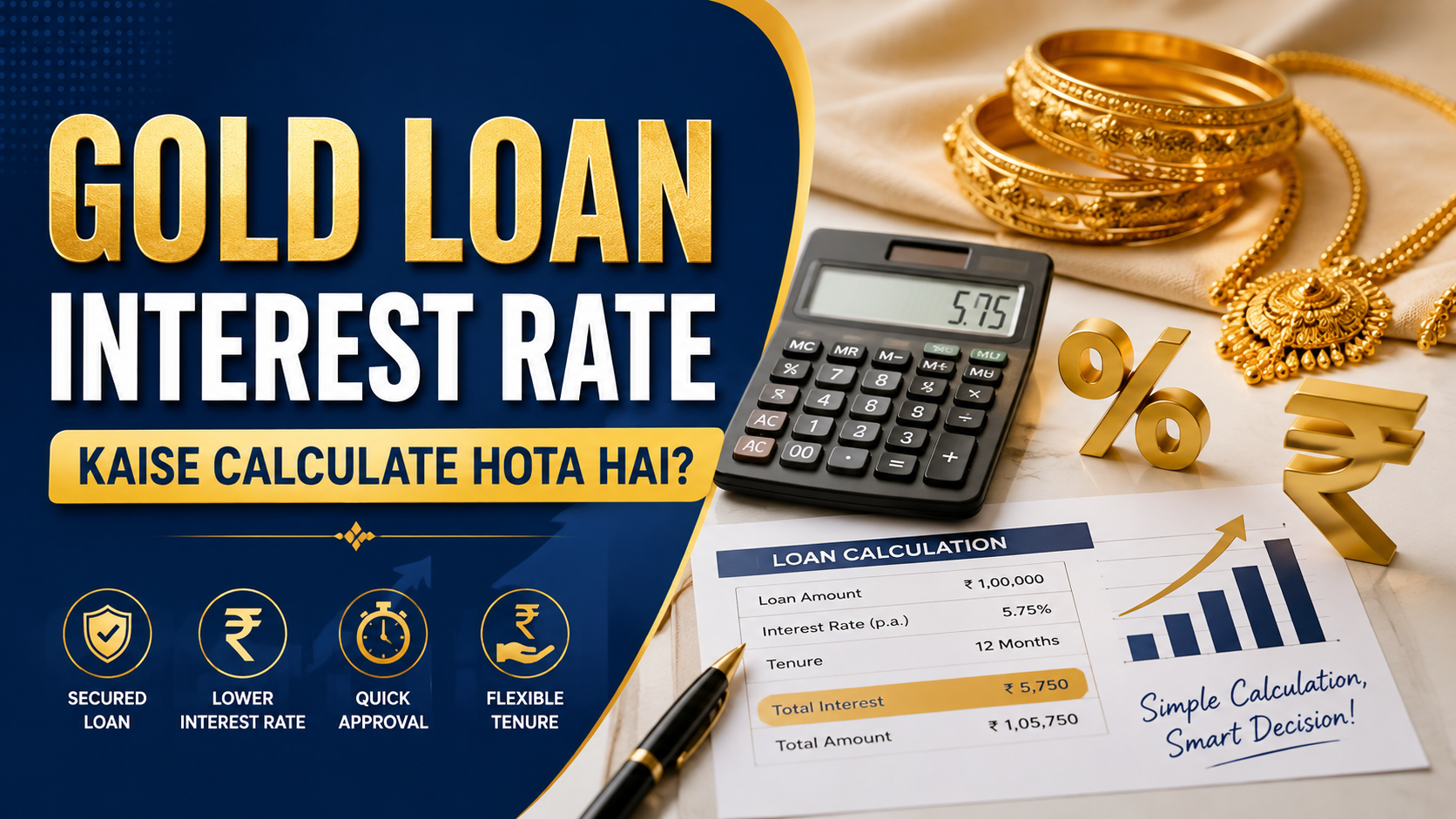
8. Gold Loan Interest Rate Aur Charges Kaise Compare Karein?
Understanding the Gold Loan Process is incomplete if you look only at the advertised interest rate. The actual cost of borrowing can include several different charges.
- Interest charges
- Processing fee
- Gold appraisal or valuation fee
- Applicable taxes
- Penal or overdue charges
- Other charges mentioned in the loan agreement
Interest rates can vary by lender, loan amount, repayment structure, tenure and product type. They can also change over time, so always verify the latest rate on the lender’s official website when you are ready to apply.
Imagine that Lender A offers a lower interest rate but charges a high processing fee. Lender B has a slightly higher rate but lower additional charges. Depending on your loan amount and tenure, Lender B could still cost less overall.
Ask for the lender’s Key Fact Statement or equivalent cost disclosure and compare the total repayment amount, not only the headline rate.
9. Gold Loan Repayment Options Kaise Kaam Karte Hain?
Choosing the right repayment plan is a major part of following the Gold Loan Process safely. Gold-loan products can use different repayment structures, and the right choice depends on your income and cash flow.
EMI-Based Gold Loan
In an EMI-based structure, the borrower makes regular monthly payments according to the repayment schedule. This may suit someone with predictable monthly income because repayment is spread over time.
Bullet Repayment
In a bullet-repayment structure, principal and interest are payable according to the agreed maturity terms rather than through normal monthly principal instalments. Applicable consumption gold loans structured as bullet loans are subject to regulatory tenure conditions.
Overdraft Against Gold
Some lenders may also provide overdraft-style facilities against pledged gold. The interest and repayment mechanics can differ from a standard EMI or bullet loan.
Before choosing, calculate the monthly payment if applicable, total interest, final maturity amount and your expected income. A smaller payment at the beginning does not automatically mean the loan is easier to repay.
Select a repayment structure that you can manage comfortably without putting your pledged jewellery at unnecessary risk.
10. Gold Loan Repay Na Karne Par Kya Hoga?
Anyone following the Gold Loan Process should understand the consequences of non-payment before borrowing. Because the loan is secured by jewellery, continued default can eventually put the pledged gold at risk.
If payments become overdue, the lender can apply applicable overdue or penal charges according to the loan agreement and begin its recovery process. If dues remain unpaid, the lender may eventually auction the pledged gold after following the applicable notice and auction procedure.
The RBI framework includes borrower-protection and auction requirements. For the latest rules, always refer to official regulatory information rather than depending only on an old blog post.
If you think you may struggle to make a payment, contact the lender before the situation becomes serious. Ask whether any repayment, renewal or other permitted arrangement is available under your product.
After the complete outstanding amount and applicable dues are cleared, the pledged gold should be released according to the lender’s process and applicable rules. Compare the returned jewellery with the valuation and pledge details recorded when the loan was taken.
The safest approach is simple: borrow only what you genuinely need and only when you have a realistic repayment plan.
Gold Loan Process: Quick Checklist Before Applying
- Compare regulated banks and NBFCs.
- Check the latest interest rate.
- Understand the applicable LTV.
- Check gold purity and net weight.
- Ask for the valuation details.
- Check processing and appraisal charges.
- Understand the repayment option.
- Check the loan tenure.
- Read late-payment and auction conditions.
- Keep all loan and valuation documents.
- Borrow only what you can realistically repay.
Frequently Asked Questions About the Gold Loan Process
Gold Loan Process Without Income Proof?
Some secured gold-loan products may have simpler income-document requirements than unsecured loans, but the exact requirement depends on the lender, product and loan amount. A lender can still assess repayment capacity.
Is CIBIL Score Required for a Gold Loan?
A gold loan is secured by pledged gold, so the assessment can differ from an unsecured personal loan. However, lenders may still carry out credit or repayment-capacity checks depending on the amount and product.
How Much Loan Can I Get Against ₹1 Lakh Worth of Gold?
The final loan amount depends on eligible gold value, purity, net weight, applicable LTV and lender policy. If an eligible value of ₹1 lakh is subject to an 85% maximum LTV, the mathematical ceiling would be ₹85,000, but the actual offer may be lower.
Can I Get a Gold Loan Against Gold Coins?
Certain permitted gold coins may be accepted subject to regulatory limits and lender policy. Confirm the coin type and weight with the lender before visiting the branch.
Can I Get a Gold Loan Against a Gold Bar?
Primary gold such as bullion or gold bars should not be assumed to qualify for a normal personal gold loan. Jewellery, ornaments and permitted coins are treated differently.
How Quickly Can I Get a Gold Loan?
Processing time varies by lender. Because the loan is secured by gold, some lenders may process eligible applications quickly once KYC and valuation are completed, but there is no universal guarantee of instant approval.
Which Is Better: Gold Loan or Personal Loan?
A gold loan is secured by jewellery, while a personal loan is generally unsecured. Compare total borrowing cost, eligibility, repayment ability, tenure and the risk of pledging your gold before deciding.
Conclusion: How to Follow the Gold Loan Process Safely
The Gold Loan Process is straightforward when you follow the steps in the right order: compare regulated lenders, check eligibility, complete KYC, submit eligible gold for valuation, review the loan offer and choose a repayment plan you can realistically manage.
Do not focus only on fast approval. Compare interest rates, processing fees, LTV, gold valuation, repayment terms and total borrowing cost. Your jewellery may have both financial and emotional value, so avoid borrowing more than you can comfortably repay.
For more loan-related guides, visit Loan Enquiry For You. You can also read our About Us, Terms and Conditions and Contact Us pages.
Disclaimer
This article is for general informational and educational purposes only and should not be treated as financial advice. Interest rates, eligibility criteria, LTV limits, charges, documentation requirements and lender policies may change. Always verify the latest information directly with the relevant bank, NBFC, lender or official regulatory source before applying for any loan.