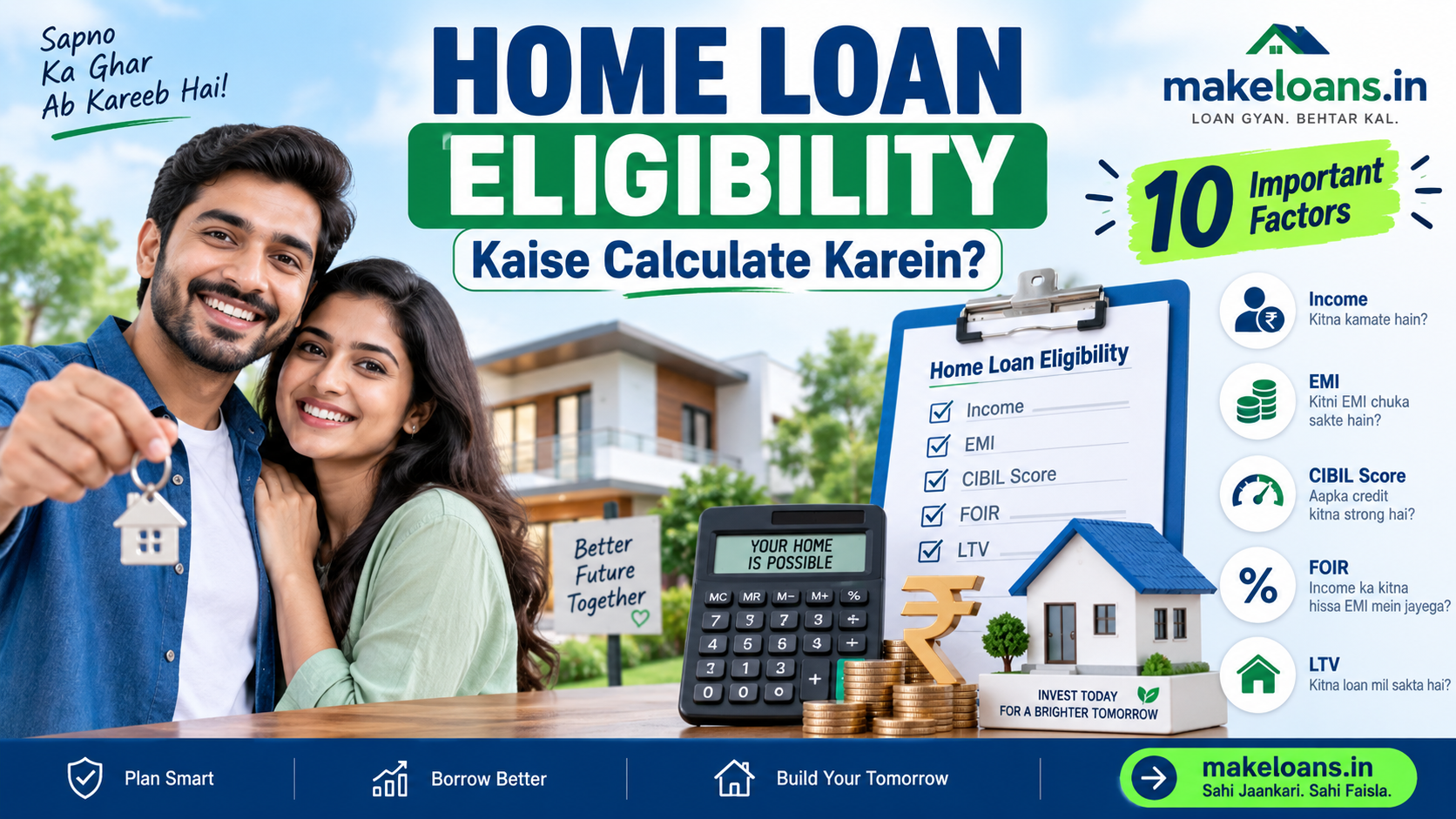

Home Loan Eligibility: 10 Important Factors to Calculate It
Home Loan Eligibility ka matlab hai lender aapki income, age, credit profile, existing EMIs, repayment tenure aur property value ke basis par approximately kitna loan approve kar sakta hai.
Agar aap soch rahe hain Home Loan Eligibility Kaise Calculate Karein, to sirf salary dekhna enough nahi hai. This guide from Loan Enquiry For You 10 important factors ko simple language me explain karta hai.

Table of Contents
1. Home Loan Eligibility Kya Hoti Hai?
Home Loan Eligibility ka simple meaning hai ki lender aapki financial profile dekhkar approximately kitna loan comfortably sanction kar sakta hai.
Suppose property price ₹60 lakh hai. Iska matlab ye nahi ki bank automatically ₹60 lakh loan dega. Lender monthly income, existing EMIs, age, credit history, repayment tenure, property value and employment stability check karega.
For example, do applicants ki salary ₹80,000 per month hai. Applicant A ke existing EMIs ₹5,000 hain, while Applicant B ke ₹30,000. Same salary hone ke bawajood Applicant A ki additional repayment capacity higher ho sakti hai.
Current lender-side eligibility concepts samajhne ke liye official ICICI Home Loan Eligibility Calculator useful reference hai.
Eligibility ko maximum borrowing target nahi, planning tool ke roop me use karna chahiye.
For example, agar lender ₹50 lakh approve karta hai lekin us amount ki EMI aapke family budget ko stretch kar rahi hai, to smaller loan choose karna financially safer ho sakta hai. Home loan long-term commitment hota hai, isliye eligibility aur affordability ko alag-alag samajhna zaroori hai. Bank ka approval risk assessment hai; aapka personal budget lifestyle, future goals aur emergency needs ko bhi include karta hai.
2. Monthly Income Eligibility Ko Kaise Affect Karti Hai?
Monthly income Home Loan Eligibility ka major factor hai because home-loan EMI isi income se repay hoti hai.
Higher stable income generally stronger eligibility support kar sakti hai, but lender gross salary ke saath net disposable income and current obligations bhi dekhta hai.
Suppose Applicant A earns ₹60,000 with ₹5,000 existing EMI, while Applicant B earns ₹75,000 with ₹30,000 EMI. Higher salary ke bawajood Applicant B ke paas less free monthly cash flow ho sakta hai.
Salaried applicants ke liye salary stability and employer profile matter kar sakte hain. Self-employed applicants ke liye business income, ITR, bank transactions and financial statements important ho sakte hain.
Home loan se pehle take-home income me se existing EMIs, household expenses, insurance and emergency savings subtract karo. Jo comfortable amount bachta hai, wahi realistic EMI base hona chahiye.
Income stability bhi important hai. Variable bonus, irregular incentives ya temporary income ko permanent repayment capacity samajhkar very high EMI plan karna risky ho sakta hai. Home loan ke liye conservative monthly income estimate use karna better hai, especially jab loan tenure 15–25 years ya usse bhi longer ho sakta hai.
3. Existing EMIs Aur Debt Kitna Matter Karte Hain?
Existing debt Home Loan Eligibility ko directly reduce kar sakta hai because monthly income ka ek portion already committed hota hai.
Personal loan, car loan, education loan, consumer loan and credit-card EMIs lender assessment me matter kar sakte hain.
Suppose monthly income ₹1 lakh hai. Car loan EMI ₹15,000 and personal loan EMI ₹10,000 hai. Agar proposed home EMI ₹40,000 hai, total monthly debt repayment ₹65,000 ho jayega.
Application se pehle small outstanding loans close karna eligibility improve kar sakta hai, provided aap emergency savings disturb na karein.
Existing loan close karne ke liye another expensive loan lena avoid karein. Goal overall debt burden reduce karna hona chahiye.
Agar koi small personal loan sirf 3–4 months me close hone wala hai aur property purchase urgent nahi hai, to uske close hone ke baad apply karna practical ho sakta hai. Isse monthly obligations lower ho sakti hain. Lekin emergency savings ko wipe out karke debt close karna bhi sahi nahi. Balance maintain karna zaroori hai.
4. CIBIL Score Ka Eligibility Par Kya Effect Hota Hai?
CIBIL Score lender ko borrower ki previous repayment behaviour samajhne me help karta hai. Strong repayment history lender confidence improve kar sakti hai.
Home Loan Eligibility me CIBIL important hai, but score alone approval decide nahi karta. Income, debt burden and property value bhi matter karte hain.
Apply karne se pehle credit report check karein. Incorrect overdue, unknown loan, closed account showing open or wrong personal details identify karein.
Credit-card bills and EMIs time par pay karein and unnecessary new credit avoid karein.
Credit report me sirf score nahi, repayment pattern bhi important hota hai. Recent missed payments, settled accounts, high card utilisation ya too many enquiries lender ke assessment ko affect kar sakte hain. Home purchase plan start hote hi report review karna useful hai, taaki errors ko correct karne aur repayment history improve karne ke liye time mile.
Credit score basics ke liye official CIBIL Score & Report guide bhi refer ki ja sakti hai.
5. Age Aur Loan Tenure Ka Kya Relation Hai?
Age home-loan eligibility ko affect karta hai because lender dekhta hai ki borrower ke paas repayment ke liye kitne earning years available hain.
Younger applicant ko potentially longer tenure available ho sakta hai. Longer tenure EMI reduce kar sakta hai and therefore income-based eligibility improve kar sakta hai.
Lekin longer tenure ka total interest usually higher hota hai.
Older salaried applicants ke case me retirement age important ho sakti hai. Self-employed borrowers ke liye lender different age criteria use kar sakta hai.
Home Loan Eligibility improve karne ke liye tenure unnecessarily long mat karo. EMI + total interest + retirement timeline tino compare karo.
For example, 25-year tenure EMI ko comfortable bana sakta hai, but borrower total interest significantly zyada pay kar sakta hai compared with shorter tenure. Agar borrower ki income future me increase hone ki reasonable expectation hai, to partial prepayment strategy bhi useful ho sakti hai, subject to lender terms. Tenure ko sirf eligibility boost karne ke liye unnecessarily stretch mat karo.
6. FOIR / EMI-to-Income Ratio Kya Hota Hai?
FOIR ka full form commonly Fixed Obligations to Income Ratio hota hai. Ye show karta hai ki monthly income ka kitna part fixed obligations me ja raha hai.
Suppose income ₹1 lakh hai, existing EMIs ₹20,000 and proposed home EMI ₹40,000 hai. Total fixed loan obligation ₹60,000 ho jayega.
Different lenders ki acceptable limits different ho sakti hain, isliye ek fixed universal percentage assume karna sahi nahi hai.
Home Loan Eligibility improve karne ke practical methods me small debt close karna, unnecessary EMIs avoid karna and eligible co-applicant consider karna include ho sakta hai.
Personal affordability lender FOIR se bhi important hai. Agar EMI ke baad emergency fund ke liye barely money bachta hai, loan financially aggressive ho sakta hai.
FOIR lender ki internal policy ka part ho sakta hai, lekin borrower ko apna personal comfort ratio bhi set karna chahiye. Home EMI ke baad rent replace ho sakta hai, but maintenance, society charges, property tax, insurance, repairs aur family expenses continue rahenge. Isliye lender jo maximum allow kare, wahi amount lena necessary nahi hai.
7. Co-Applicant Add Karne Se Eligibility Kaise Improve Ho Sakti Hai?
Eligible earning co-applicant combined income ke through Home Loan Eligibility improve kar sakta hai, subject to lender policy.
For example, husband income ₹70,000 and wife income ₹50,000 hai. Eligible joint application me combined repayment profile stronger ho sakta hai.
Lekin co-applicant ka CIBIL Score, existing EMIs and credit history bhi evaluate ho sakta hai.
Poor credit profile wala co-applicant automatic improvement guarantee nahi karta.
Joint loan lene se pehle ownership, tax and repayment responsibilities clearly understand karein. Sirf loan amount increase karne ke liye co-applicant add karna smart approach nahi hai.
Joint application long-term financial responsibility create karti hai. EMI delay hone par dono applicants ke credit profiles affect ho sakte hain, subject to reporting. Isliye co-applicant add karne se pehle repayment contribution, ownership structure aur future responsibilities clearly discuss karna important hai. Strong combined income tabhi useful hai jab loan genuinely affordable rahe.
8. Property Value Aur LTV Loan Amount Ko Kaise Limit Karte Hain?
High income hone ka matlab lender property value ka unlimited amount finance karega, aisa nahi hai.
LTV yani Loan-to-Value ratio property value ke comparison me loan amount ko represent karta hai.
Home Loan Eligibility ke final result ko income-based capacity and property/LTV-based limit dono affect kar sakte hain.
Suppose property seller ₹60 lakh maang raha hai but lender valuation ₹55 lakh karta hai. Financing ₹55 lakh valuation ke basis par calculate ho sakti hai, subject to policy and regulatory limits.
Down payment planning me valuation difference ko bhi include karo. Seller ki asking price lender valuation se higher hui to borrower ko additional own contribution arrange karna pad sakta hai. Stamp duty, registration and other transaction costs bhi loan amount ke bahar ho sakte hain, depending on lender structure and applicable rules.
Current regulatory housing-finance framework ke liye official Reserve Bank of India website refer karein.
9. Home Loan Eligibility Calculator Kaise Use Karein?
Home Loan Eligibility Calculator approximate borrowing capacity samajhne ka useful tool hai.
Common inputs me monthly income, existing EMIs, tenure and interest rate include hote hain.
Example: monthly income ₹80,000, existing EMI ₹10,000, tenure 20 years and illustrative lender rate enter karke estimated loan eligibility dekhi ja sakti hai.
Then tenure 25 years karke compare karo, ya existing EMI zero karke dekho. Isse variables ka effect samajh aata hai.
Calculator result sanction letter nahi hota. Final approval document verification, credit assessment and property evaluation par depend karta hai.
Calculator ko scenario planning ke liye use karo. For example, income same rakhkar tenure change karo, existing EMI reduce karke dekho, ya different interest assumptions compare karo. Isse aapko ye samajhne me help milegi ki kaunsa factor eligibility par sabse zyada effect daal raha hai. Final property budget conservative estimate par set karna safer hai.
10. Home Loan Eligibility Improve Karne Ke Practical Tarike Kya Hain?
Agar current Home Loan Eligibility desired property ke liye sufficient nahi hai, kuch practical steps help kar sakte hain.
- Existing small loans close karein.
- Credit score improve karein.
- Eligible earning co-applicant consider karein.
- Higher down payment build karein.
- Income properly document karein.
- Application se pehle unnecessary new debt avoid karein.
- Tenure carefully choose karein.
Longer tenure eligibility improve kar sakta hai but total interest increase ho sakta hai. Higher down payment requested loan amount reduce kar sakta hai and repayment easier bana sakta hai.
Complete process ke liye hamara Home Loan Kaise Le guide bhi dekhein.
Goal maximum eligibility nahi, comfortable home loan hona chahiye.
Agar desired property lene ke liye finances bahut stretch ho rahe hain, lower-budget property choose karna bhi smart financial decision ho sakta hai. Loan ka objective ghar lena hai, monthly financial stress create karna nahi. Emergency fund, retirement investment, insurance and family goals home EMI ke baad bhi continue hone chahiye.
Home Loan Eligibility: Quick Checklist
| Factor | Impact on Eligibility |
|---|---|
| Monthly Income | Higher stable income can improve capacity |
| Existing EMIs | Higher debt can reduce eligibility |
| CIBIL Score | Stronger credit profile can help |
| Age | Can affect available tenure |
| FOIR | Shows monthly debt burden |
| Co-Applicant | Eligible income may improve capacity |
| LTV | Can limit final sanctioned amount |
Frequently Asked Questions
Home Loan Eligibility Kaise Calculate Karein?
Monthly income, existing EMIs, credit profile, age, loan tenure and property value ko combine karke estimated eligibility calculate ki ja sakti hai.
Does Higher Salary Always Mean Higher Home Loan?
Not always. Existing EMIs, CIBIL Score, age and property value bhi final eligibility ko affect karte hain.
Can a Co-Applicant Increase Home Loan Eligibility?
Yes, if lender eligible co-applicant income consider karta hai. However, co-applicant credit profile and liabilities bhi assess ki ja sakti hain.
Conclusion: Home Loan Eligibility Kaise Calculate Karein?
Home Loan Eligibility monthly income, existing EMIs, age, credit score, tenure, property value and co-applicant profile jaise multiple factors par depend karti hai.
Eligibility calculator useful estimate deta hai, but final sanction lender verification and policy par depend karta hai.
Credit report check karein, existing debt reduce karein, realistic EMI calculate karein, down payment build karein and property budget conservative rakhein.
Disclaimer
This article is for general informational and educational purposes only and should not be treated as financial advice or a guarantee of loan approval. Home-loan eligibility, LTV limits, interest rates, tenure, income requirements and lender policies can change. Always verify the latest terms directly with the relevant regulated bank or housing finance company before applying.